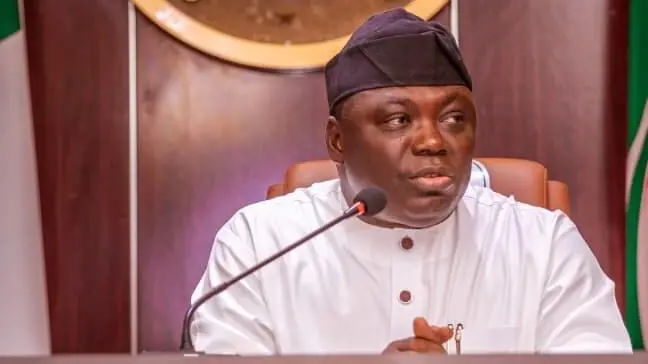
Aminu Imam
The Northern Broadcast Media Owners Association, (NBMOA), has sounded an alarm to President Bola Ahmed Tinubu, warning that a recent court ruling threatens Nigeria’s broadcast industry, national security, and cultural identity.

In an open letter to the President, titled: “For Records and Posterity”, Dr. Ahmed Tijjani Ramalan, Chairman of NBMOA’s Board of Trustees, (BoT), called for urgent presidential action following a Federal High Court judgment that declared Arewa24 TV — a foreign-owned, Hausa-language channel — as merely a “content creator” rather than a licensed broadcaster under Nigerian law.
Ramalan argued that the ruling, delivered orally by the presiding judge, Justice Omotoso on July 2, effectively grants foreign broadcasters free rein to bypass licensing requirements, dodge taxes and ignore national content regulations. “This flawed verdict opens dangerous loopholes that can be exploited to recolonise Nigeria’s broadcast economy, drain local advertising revenue, and erode our cultural heritage”, he wrote.
According to the NBMOA, Arewa24 TV, while branding itself with the culturally-loaded “Arewa” name and Hausa symbolism, is owned and operated by foreign interests, who have allegedly side-stepped national tax and regulatory obligations for years.

According to the NBMOA, obtaining a license from the National Broadcasting Commission (NBC), in addition to approvals from agencies such as the Advertising Regulatory Council of Nigeria, (ARCON) and the Corporate Affairs Commission, (CAC), is a prerequisite for any legal broadcasting operation in Nigeria.
The association also raised concerns about the cultural orientation and ownership structure of AREWA24 TV. It alleges that the channel, despite projecting itself as a Hausa-language station, operates in contradiction to core Arewa (Northern Nigerian) cultural values and ideals.
The association fears the ruling sets a precedent that could allow other local and foreign players to pose as “content creators”, thereby resisting oversight from the NBC and ARCON.

Ramalan warned that the same legal loophole could pave the way for copycat channels under other regional identities — like a foreign-backed “ODUATV” for Yoruba audiences or “FULFULDETV” for Fulani communities — diluting indigenous control over Nigeria’s airwaves and advertising market.
“This is not just about the Media, but ‘National Security’. Job losses in our indigenous broadcast industry will swell youth unemployment, fueling crime and instability,” he added, calling for an immediate Executive Order to close the gaps before they deepen.
NBMOA however expressed its happiness with the Kano State Government for promptly addressing the controversy surrounding Arewa24 TV’s on-air operations.
Recall that the State government recently banned 22 Hausa film series on the station for breaching censorship regulations, ordering an immediate stop to their airing and online streaming and further took AREWA 24 TV channel to the State High Court on various complaints from citizens on acts that are undermining the Culture Tradition of Indigenes of Kano State. The Kano State Government also served Quit Notice on its tenancy on its production transmission in the premises of Abubakar Rimi Radio and Television (ARTV) Kano.
Critics argue that the channel’s backers have exploited political ties in the North to sidestep Nigeria’s broadcasting rules and cultural norms, enabling them to dominate the northern TV market unchecked while projecting a cloned Hausa identity. While unproven, these allegations have intensified calls for a federal investigation to expose the true ownership structure behind Arewa24 TV and hold any complicit officials accountable for what some see as the gradual erosion of indigenous media control.
The letter, also sent to the Senate President, House Speaker, security chiefs, and media regulators, underlines growing tension in Nigeria’s broadcast sector over foreign influence and regulatory loopholes.
Meanwhile, NBMOA says it is preparing to challenge the ruling at the Court of Appeal, the ECOWAS Court, and the Supreme Court — but insists only decisive executive action can prevent what it describes as cultural exploitation and economic sabotage.